Translate

martes, 29 de mayo de 2012

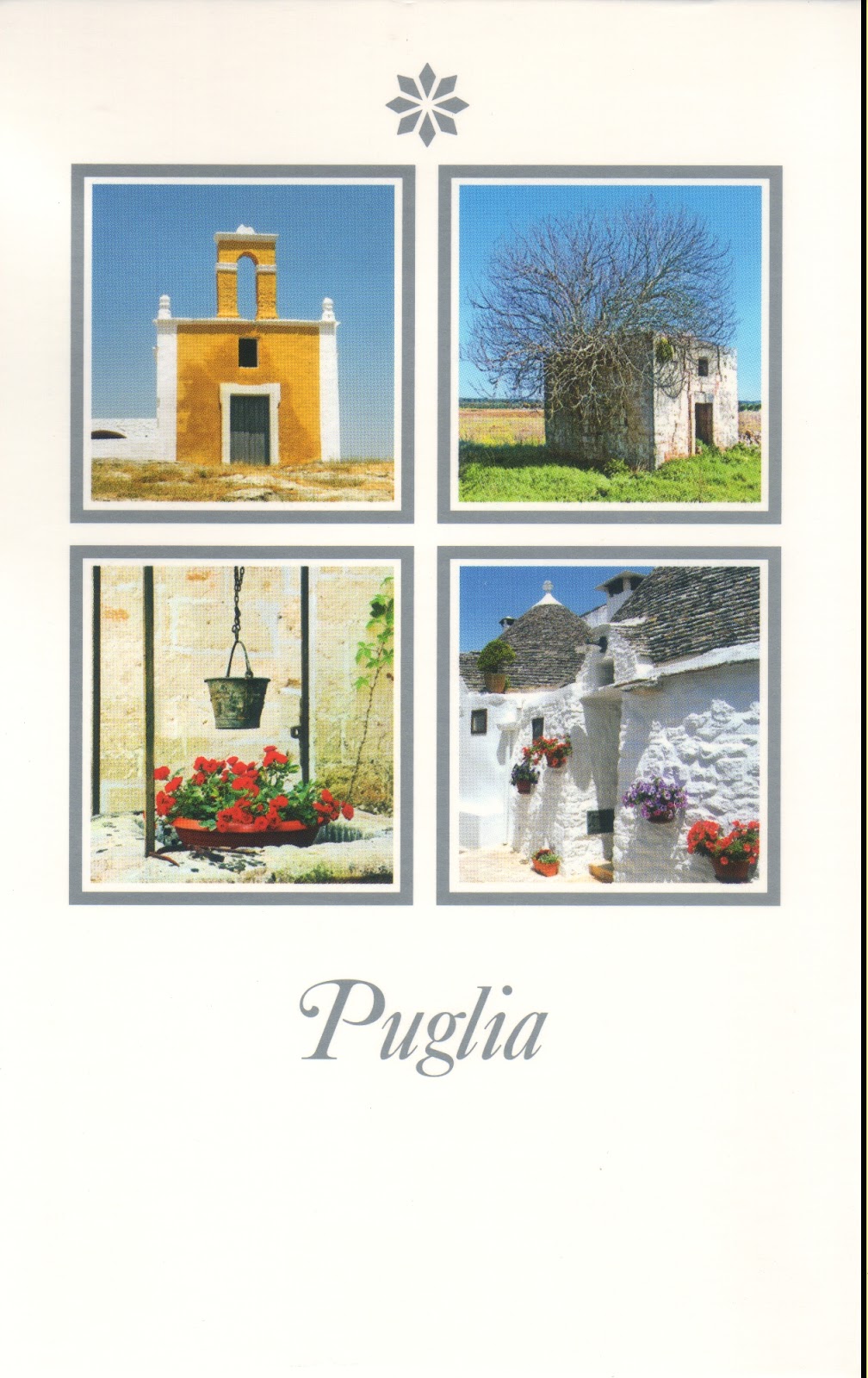
1° - Lecce, Italia

Gracias Sergio por tu envío, bellas postales, gracias por las estampillas y el sobre. ¡¡Eres el primero desde que comencé mi blog, GRACIAS!!


1° -  Lecce, Italy

Thank you Sergio, for the postcards, the stamps and the cover. You are the first one I receive, since I start my blog. THANK YOU!!


Foto/Photo: G. Manna & F. Piro
Puglia, Italia / Puglia, Italy

Foto/Photo: Franco Piro
Basílica de la Santa Cruz / Basilica of the Holy Cross

El arte de coleccionar tarjetas postales


Uno de los más interesantes aspectos del coleccionismo y que tiene una relación directa con la filatelia es la cartofilia o arte de coleccionar tarjetas postales en sus tres aspectos: la tarjeta emitida por el Estado con su franqueo impreso en la misma, la tarjeta ilustrada, y la de carácter esencialmente carto-filatélico, constituida por la tarjeta conocida como “maximum” y que da lugar a la maximafilia, algo así como la filatelia, cartofilia y marcofilia reunidas en un todo.


El arte de coleccionar tarjetas postales es muy antiguo, al principio solo se coleccionaban las tarjetas por las vistas que ellas tenían, y se hacia mas bien con el fin de tener una colección de fotografías o panoramas de los diversos países. Más tarde el coleccionismo de tarjetas postales se convirtió en algo más científico y sus cultores exigían que las postales tuvieran una estampilla de correos con su correspondiente matasellos.

El auge de la filatelia provoco la división entre los coleccionistas de sellos, que recortaban las estampillas impresas de las tarjetas postales para sus colecciones y los que verdaderamente se interesaban por las postales en si. Nació entonces el coleccionismo de las “maximum”, que dió origen a la maximafilia o sea el máximo de la perfección de la cartofilia. Se considera a la maximafilia como parte integrante de la filatelia, ya que se puede resumir como el coleccionismo de postales ilustradas que contienen ciertas características determinadas.


El coleccionismo de postales “maximum” tiene que ceñirse a ciertos cánones. Son ellos: la presentación de la estampilla del lado de la vista, con su correspondiente matasello, como faz primordial. Para que una postal sea considerada “maximum” es preciso que presente concordancia, cuanto mayor sea ella, entre: la postal, la estampilla y el matasellos de correos. Hay una condición “sine qua non”: las  estampillas no pueden ser reproducción de la postal. Y se comprende que así sea, pues lo contrario seria muy sencillo. Nada más fácil que confeccionar las postales limitándose el editor, sin ningún trabajo, a reproducir o copiar la estampilla.


Algunos especialistas han presentado sus puntos de vista en cuanto a las condiciones que deben reunir las postales para ser consideradas como “maximum”. Todos ellos han estado de acuerdo en lo que se refiere a las primordiales.

1.- La postal debe presentar el mismo motivo de la estampilla, tanto más exacto cuando ello sea posible, más no debe ser una reproducción de la estampilla.

2.- La estampilla debe ser matasello en calidad del nacimiento o fallecimiento, u otra localidad íntimamente relacionada con la persona presentada. Si el retrato es de un Jefe de Estado o estadista, el matasello debe corresponder al de la capital o localidad donde aquel actúe preponderadamente.

3.- Para paisajes (vistas) el matasello escogido deberá ser de la oficina local. Si no la hubiera debe utilizarse la más próxima.

4.- El matasello debe ser aplicado exclusivamente mientras la estampilla se encuentre en circulación.


Se debe agregar que todos los matasellos deben ser absolutamente claros, y es de primordial importancia que se lea claramente el nombre de la oficina postal y la fecha.

Así que recordemos, para que una postal pueda considerarse “maximum”, es preciso que reúna la mayor cantidad de coincidencias: estampilla, matasello, motivo, tiempo y lugar.


Se puede decir que en cartofilia, lo más importante es la maximafilia, pero no obstante el coleccionismo de otro tipo de tarjetas postales no es de despreciar. Un ejemplo son las postales TCV, o sea postales con sello del lado de la vista. Este tipo de colección se asemeja mucho a las postales “maximum”, con la diferencia de que la estampilla no tiene que ser igual al matasello, siendo únicamente necesaria las siguientes: que la estampilla pertenezca al país a que corresponda la vista y que el matasellos sea de la localidad a que pertenezca el paisaje o a la más cercana si en ella no existiera oficina postal.


Un nuevo fenómeno en el mundo de las postales es Postcrossing. Postcrossing es un proyecto en línea que permite que los miembros envíen y reciban postales reales de todas partes del mundo. Así que si estás interesado en ampliar tu colección, al unirte a Postcrossing podrás enviar y recibir postales de alguien en algún lugar del mundo.


The art of collecting postcards

One of the most interesting aspects of collecting and that has a direct relationship with philately is deltiology the art of collecting postcards in three aspects: the card issued by the State with the postage printed on it, the illustrated card, and essentially the philatelic one, consisting of the card known as “maximum” and that leads to maximafilia, something like philately, the deltiology and marcophily gathered into a whole.


The art of collecting postcards is very old, and initially collected only by the views they had, and it was rather to have a collection of photographs and landmarks of several countries. Later collecting postcards became something more scientific and followers demanded for postcards to have a postage stamp with the appropriate postmark.

The philately boom caused the division among stamp collectors, which cut the postcards to get the stamps for their collections, and from the ones interested in the postcard itself. With this, it born the collecting of the “maximum”, which led to the maximafilia or the maximum of the perfection of cartofilia. The maximafilia is considered as an integral part of philately, because it can be summarize as the collecting of picture postcards that contain certain specific characteristics.   


The “maximum” collecting of postcards must adhere to certain canons. They are: the presentation of the label side of the eye, with its corresponding postmark as primary face. For a postcard to be considered “maximum”, it is necessary for a concordance, the higher the better, between the postcard, the stamp and postmark. There is a condition “sine qua non”; and the stamps cannot be reproduction of the postcard. And so it is understandable that, because otherwise it would be very simple. Nothing easier than limiting itself make the post editor, without any work, play or copy the stamp.


Some specialists have presented their views as the conditions to be met by the postcards to be considered as “maximum”. They have agreed in regards to the primary.

1.- The postcard must present the same motive of the stamp, the more accurate where possible but should not be a reproduction of the stamp.

2.- The stamp must be postmarked on the quality of birth or death, or other location closely related to the person presented. If the portrait is a head of state or statesman (stateswoman), the postmark must correspond to the city or town where he or she acts.

3.- For landscapes (views) the postmark must be from the local office. If none, it should be used the next available or the closest.

4.- The postmark must be applied only while the stamp is in circulation.


It is a must to add, that all postmarks must be absolutely clear, and of greater importance to clearly read the name of the post office and date.

So remember, that a card to be considered “maximum”, it is necessary that meets the maximum matches: stamp, postmark, reason, time and place.


We can say that in deltiology, the most important is the maximafilia, but nevertheless the other postcard collecting is not negligible. An example is the TCV postcard, which is the postcard with the stamp on the side of the view. This type of collection is much like the postcard “maximum”, with the difference that the stamps does not have to be equal to the postmark, being only necessary the following: that the stamp belongs to the corresponding country and that the postmark is either from the local authority over the landscape or the nearest if it does not exist a post office.


A new phenomenon in the postcard world is Postcrossing. Postcrossing is an online project that allows its members to send and receive real postcards from all over the world. So if you are interested in pushing a little your postcards collection, remember you can join Postcrossing and you will be sending and receiving postcards from someone of somewhere in the world! 


martes, 22 de mayo de 2012

Filatelia temática


La enorme variedad de temas que sirven de motivos ilustrativos de las estampillas es lo que ha dado origen a lo que se denomina filatelia temática. La filatelia temática es una de las formas modernas del coleccionismo de sellos, su auge se inició hace algunas décadas y en unos cuantos años logró alcanzar un amplio grado de desarrollo.


En los últimos años la filatelia temática ha tenido que dividirse en dos formas: la propiamente temática que es la que se ocupa de coleccionar los sellos que se encuentran ligados por un tema común, aunque los motivos que ilustran los sellos puedan no tener relación alguna unos con otros, pero que ya en conjunto nos permitan el desarrollo de un tema central que relate una historia; y la llamada filatelia temática de tópicos, que es la que el coleccionista reúna de todos los sellos que en ellos aparezca un solo tópico, que puede ser tan amplio como lo desees, pues recuerda que allí tendrás sellos de todo el mundo, además recuerda que unos sellos tienen alguna relación con otros que ya están en tu colección; estos sellos tienen que ser bien ordenados, bien clasificados, ya que no tienen historia alguna.


El coleccionismo temático de estampillas, no es más que una forma evolucionada de la filatelia. Las colecciones temáticas no requieren inversiones mayores que las posibilidades que tiene el coleccionista. El coleccionismo temático aumenta año con año, su desarrollo sorprende; este rápido crecimiento ha aportado nuevas y grandes ideas, ha sugerido nuevos temas, ofrece nuevos métodos y crea mejores y mayores oportunidades y placer diario a aquellas personas que coleccionan temática.


El coleccionismo temático tiene atractivos para todos, ya sean filatelistas o no; todos encuentran un aliciente en las colecciones por temas, tenía la ventaja hasta hace algunos años de que carecía de reglas, imposiciones y prohibiciones, hoy es todo lo contrario y aparte de eso se califica la nitidez y limpieza de la misma. El interés cultural de la filatelia ha sido reconocido desde que formaron las primeras colecciones, recuerda que las colecciones temáticas aparte de interés cultural tienen otro que se basa en la belleza de las estampillas que lo forman.


En la clasificación temática, el coleccionista encuentra una variedad de temas que abarcan la ciencia,  el arte, la cultura, la técnica, etcétera; los motivos que ilustran los sellos dan un pretexto para coleccionar desde la metafísica, la filosofía, el teatro, amor a las cosas, en fin las opciones son bastante amplias.


No te imaginas cuanto puedes reunir de sellos a la hora que te decidas a formar una colección temática, recuerda que en esa colección habrá sellos de todo el mundo y a cual mejores en diseño y belleza. El alto grado de desarrollo alcanzado por el coleccionismo temático de estampillas, se ha logrado a pesar de ciertos opositores que para su evolución ha tenido. Los coleccionistas de la vieja guardia adoptaron, cuando la filatelia temática se inicio, una actitud de disimulo hacia la nueva forma de coleccionar los sellos, considerándola como una forma de reunir sellos solo por reunirlos, ya fueran bonitos o no, su actitud permaneció así por mucho tiempo, hasta que se convencieron de las enormes posibilidades filatélicas del coleccionismo temático y en la actualidad son miles y miles de personas que coleccionan temáticas sin abandonar sus antiguas colecciones tradicionales.


Thematic philately

The enormous variety of topics that serve illustrative purposes for stamps is what has given rise to what is called thematic philately. Thematic Philately is a modern form of stamp collecting, the boom began decades ago and in a few years it managed to achieve widespread development.


In recent years the thematic philately had to be divided into two forms: the actual issue is the one in charge of collecting the stamps that are linked by a common theme, though the reasons that illustrate the stamps may not have a relationship with others, but that it will enable us to jointly develop a theme that tells a story, and the so called topical thematic philately, which is what the collector collects from all the stamps that they see of a single topic, which can be as wide as you want because, remember, these are stamps from around the world and remember that some stamps have some relationship to others already in your collection, these stamps must be well organized, well classified, as they have no history.


The thematic stamps collecting, is no more than an evolved form of philately. The thematic collections do not require major investments than the possibilities the collector already has. Thematic collecting is increasing year by year its amazing development, has brought new and great ideas, suggests new topics, provides new methods and creates better and more opportunities and daily pleasure to those who collect by theme.


Theme collecting has attractions for all philatelists; all find a spark in the collections by subject. It had the advantage until some years ago that it had no rules, impositions and restrictions, today is the opposite and apart from that is scored by sharpness and cleanliness. The cultural interest of philately has been recognized since forming the first collections, remember that the thematic collections besides cultural interest, they have another which is based on the beauty of the stamps that form it.


In the subject classification, the collector has a variety of topics covering science, art, culture, technology…, the reasons that illustrate the stamps are a pretext for collecting from metaphysics, philosophy, drama, love to things, in short the options are quite extensive.


You cannot imagine how much you can collect on stamps when you decide to form a thematic collection, remember that in that collection stamps will be from around the world and to which best in design and beauty. The high degree of development of thematic stamp collection has been achieved despite some opposition that its evolution has had. The collectors of the old guard took when beginning thematic philately, an attitude of pretense towards the new way of collecting stamps, considering it as a way to collect stamps just to gather, whether beautiful or not, their attitude remained for so long time, until they were convinced of the enormous possibilities of collecting by theme. Today there are thousands and thousands of people who collect by theme without abandoning the traditional collections.

martes, 15 de mayo de 2012

Algunos consejos prácticos


Hay quienes coleccionan porque quieren hacer un negocio de esto, otros por el deseo de tener las estampillas de todos los lugares imaginables sin realmente calcular el precio (mi caso), y otros que lo hacen muy calculadamente.  Yo trato de informarme, pero no espero tener una colección valiosa.  Lo que trato de decir es que no busco en vender, es sólo un pasatiempo al que le tengo mucha pasión, cada estampilla es un lugar, una persona que me ayudó a conseguirla.  En cuanto al valor, siempre he considerado que el coleccionista, el dueño de su colección es el que le da mayor valor a la misma.  Y como he dicho antes, hay muchos más experimentados que yo, que muy probablemente digan que soy una ingenua.  


Pero si quieres hacer tu colección valiosa te puedo dar algunos consejitos.  El primero no fiarse de la histeria colectiva.  No guardar hojas completas de estampillas de bajo valor facial.  A veces mucha gente lo hace, coleccionistas y no coleccionistas.  Resultado: todos los que guardaron hojas todavía poseen esos ejemplares. 

Los sellos de pequeño valor facial son menos raros que los que tienen valor facial alto, por lo tanto el segundo consejo es: vale más invertir en los sellos de elevado valor facial.  La mayoría de sellos conmemorativos de valores altos que la tarifa de una carta corriente siempre se cotizan bien, ¿por qué?  Sencillamente porque, los comerciantes no pueden acaparar demasiados ejemplares de estas estampillas costosas y porque les urge renovar su reserva. 


La revalorización de los sellos corrientes nunca llega a ser lo que nosotros esperamos, debido a que su valor facial es de baja denominación y son millones los que emiten de cada uno.  Se puede también hacer una buena inversión adquiriendo los sellos que gozan de poco favor, con el fin de guardarlos.  Hace muchos años, se trataba de los sellos llamados de “rollo” que no se hallaban a la venta en las oficinas de correos, y los coleccionistas no siempre pensaban en guardar algunos.  Luego, demasiado tarde, se daban cuenta de que debían hacerlo, y como lo hacían todos al mismo tiempo los precios subían escandalosamente.  Todas las series de sellos regulares en rollo dentados en dos lados solamente, valen hoy el doble o triple, según el sello.  En la actualidad los sellos de rollos están puestos en venta en todas las oficinas de correos, por tanto de más fácil adquisición, pero también con menos seguridad de que se revaloricen mucho.


Los sellos conmemorativos todo el mundo los adquiere.  Pero sucede que a veces algún sello conmemorativo produce inesperadas sorpresas.  En las exposiciones filatélicas ponen en venta por poco tiempo los sellos que conmemoran dicho evento, o a veces lo que dura la exposición, en Europa, Estados Unidos, Canadá o Sur América, y de repente estos sellos suben de valor sin esperarlo, todo es suerte!

Hay que recordar que todos los sellos que salen en block de cuatro o más sellos, es necesario adquirirlos en los primeros días que salen a la venta, pues de estos sellos no hacen un tiraje grande.

También es bueno tener conocimiento de que cantidad es el tiraje de cada emisión, y en base a eso tu sabrás si la serie o sello que se está poniendo a la venta puede ser o no de gran valor en el futuro. 


Some tips

Some people collect stamps because they want to make a business of it, others just because of the desire to have the stamps of all imaginable places without actually calculating the price (my case), and others that make it very balanced.  I try to inform myself, but I am not hoping in having a valuable collection.  What I am trying to say is that I’m not interested in selling, it is just a hobby and I have lots of passion for it.  Each stamp is a place, a person or friend who helped me get it.  In value terms, I have always considered that the collector, the owner of the collection is the one that gives greater value to it.  And as I said before, there are far more experienced than me, they most likely say I am naïve.


But if you want your collection to be valuable I can give you some tips.  The first do not rely on mass hysteria.  Do not store full sheets of stamps of low face value.  Sometimes many people do, collectors and non-collectors.  Results: all those who stored the sheets still have these copies.

Stamps of low face value are less rare than those with high face value, therefore the second advice is worth investing in high face value stamps.  Most high value commemorative stamps, higher than the rate of an ordinary letter always trade well, why?  Simply because traders can not grab too many copies of these stamps because they are expensive and they are urged to renew their reserve.


Revaluation of current stamps is never quite what we expect, because its face value is in small denominations and millions where issued of each.  You can also make a good investment buying stamps that enjoy little favor, in order to save.  Many years ago, it was the one called “roll stamps” that where not on sale in post offices, and collectors did not always think to save some.  Then, too late, they realized that they should, and as they did all at once outrageously prices rose.  All regular series of round serrated stamps on two sides only, now worth double or triple according to the label.  Currently roll stamps are on sale at all post offices, thus more easily acquired, but also with less security to be revalued much.


The commemorative stamps are purchased worldwide.  But sometimes it happens that a commemorative stamp produces unexpected surprises.  The stamp shows go on sale for a short time with stamps that commemorate the event, or sometimes just the lasting of the exposure in Europe, USA, Canada or South America, and suddenly these stamps go up in value unexpectedly, everything is luck!

Remember that all the stamps that come in block of four or more stamps, you need to buy in the first days on sale, because generally these stamps do not make a large print run.

Also, be aware of how much is the circulation of each issue, and on the basis you will know if the series or stamps that is being put up for sale may or may not be of great value in the future.  


domingo, 13 de mayo de 2012

Ahora, ¿cómo conseguir los sellos?


No te puedes imaginar con que rapidez se acumulan los sellos.  Debes empezar comunicando a todos tus amigos, a los parientes y conocidos tu afición a coleccionar estampillas y poco a poco veras ensanchar la red hasta el infinito.  Una prima es secretaria en una oficina que recibe correo a paladas, un amigo se cartea con una docena de chicos de su edad de diferentes partes del mundo, la abuela conserva la correspondencia de un familiar que fue misionero en África, tu cuñada está dispuesta a deshacerse de su colección de tarjetas postales porque se cambia de casa.  


A medida que pasen los años y esperando que te mantengas coleccionando, te enterarás que tus amigos han abandonado su afición y guardan en un cajón este recuerdo de la infancia.  Pues bien, a la mayor parte de ellos les encantará regalártela.  Hallarás algún sello que te falte o tendrás otros para intercambiar.

Así que notificas a todo el mundo el inicio de tu colección.  Y recuerda recibir con suficiente apreciación cualquier donación.  ¡Tus benévolos colaboradores deben sentirse útiles y apreciados!  No olvides de ensalzar la belleza de alguno de los ejemplares que guardaron para ti y si puedes, hasta contar la historia que lo relaciona con otro.  La experiencia me ha demostrado que es ocioso y complicado explicar a los amigos qué estampillas nos interesan.  Limítate pues a pedirles que reúnan para ti todos los que caigan en sus manos.  Ellos no saben que un sello de una serie actual perforado por dos lados solamente es un ejemplar menos corriente.  O que el sello no tiene la marca de fósforo que debía tener, lo que hace de él un ejemplar raro. Generalizando la ayuda, para ellos, todo se hace más sencillo.


 Tras haber comunicado a todo el mundo tu afición, aún es necesario hacer un esfuerzo personal, por ejemplo, escribir a la mayor cantidad de personas posible residentes en la mayor cantidad de países posible. De este modo, tu buzón te deparará muchas sorpresas.

Es preferible organizarse por sí mismo.  Por ejemplo, escribir a las oficinas de filatelia del mayor número posible de países con el pretexto de obtener informes acerca de la manera de adquirir nuevas emisiones al costo de su valor facial y asimismo, para obtener una correspondencia franqueada con bonitos sellos.  Aunque no te garantizo el éxito, porque lo lamentable es que no todas las oficinas de filatelia utilizan sellos para franquear su correo, sino sobres timbrados… :(  


Sea como fuere, tienes muchas posibilidades de recibir una correspondencia interesante.  El único contratiempo lo constituye el hecho de la proliferación de franqueos mecánicos que sustituyen cada vez más a los sellos.  Desde hace unos años, la correspondencia de serie no es tán prolífica como antaño en bellos ejemplares.  No obstante, vale la pena intentarlo… :)


Now, how do you get the stamps?


You can not imagine how quickly stamps accumulate.  You should start communicating to all your friends, relatives and acquaintances your hobby of collecting stamps and gradually the network will expand to infinity.  A cousin is a secretary in an office that receives mail in strokes, a friend corresponds with a dozen kids his age around the world, grandma retains all the correspondence from a relative who was a missionary in Africa, your sister-in-law is willing to get rid of her postcards collection because she is moving.


 As you get older and hoping you are still collecting, you’ll learn that your friends have left their hobby and keep in a drawer this childhood memory.  Well, most of them will love to give it to you.  You will find a missing stamp or you will have stamps to share.

So you notify everyone the beginning of your collection.  And remember to receive with sufficient appreciation any donations.  Your benevolent contributors should feel useful and appreciated!  Don’t forget to praise the beauty of one of the copies or to tell the story that relates to another.  Experience has shown that it is idle and difficult to explain to friends what we are interested in.  Stick on asking them to gather for you all what falls into their hands.  They do not know that a current stamp perforated on two sides only is a less common copy.  Or that the stamp does not have the phosphorus mark as it should be, making it a rare specimen.  Generalizing, for them, everything becomes easier.


After informing everybody, you still need to make a personal effort, for example, write to as many people as possible living in as many different countries.  This way, your mailbox will store many surprises.  

It is preferable to organize yourself.  For example, write to the philatelic offices from many countries on the pretext of obtaining information about how to buy new issues at face value cost, that way you will get a nice correspondence with stamps.  But I do not guarantee your success, because it is unfortunate that many philatelic offices use franking seals instead… :(


Either way, chances are you will receive an interesting correspondence.  The only setback is the proliferation of mechanical postage increasingly replacing the stamps.  In recent years, the series correspondence is not as prolific as formerly in beautiful specimens.  But worth a try… :)