¡Gracias Maryam e Irwan! Bonito sobre y bellas estampillas recibidas el día de hoy.
2° - Ottawa, Canada
Thank you Maryam and Irwan! Beautiful cover and wonderful stamps received today.
Una pequeña colección de una hondureña que ahora se encuentra en España. Editando, desde Barcelona.
Translate
jueves, 7 de junio de 2012
lunes, 4 de junio de 2012
La filatelia y la niñez
A
penas el niño llega a una edad en que comienza a interesarse por algo más que
los juegos, no falta algún familiar que, siendo filatelista, decida que debe de
seguir su ejemplo coleccionando estampillas. Y sin más ni más, le obsequia un álbum
de sellos postales, un lote de estampillas mundiales y algunos elementos de
mucha utilidad para el arte de coleccionarlas. El pariente al efectuar el
obsequio, sostiene ante los padres que le preguntan extrañados la razón de ese
regalo tan singular, que la filatelia es un elemento de cultura. Que el niño
aprende mediante ella geografía, historia y otra serie de materias que le son
necesarias para sus estudios posteriores.
Si
bien lo que se dice es cierto, creo que quien procede, lo hace erróneamente;
pues el filatelista nace, no se hace. Es lo mismo que pretender que todos los
niños sean futuros médicos, abogados o ingenieros, sin tener en cuenta sus
inclinaciones. Sabemos positivamente que la filatelia sirve para enseñar o mejor
dicho para dotar de una cultura preescolar complementaria de la que el estudio
brinda. Pero de allí, a querer que todos los niños coleccionen sellos o se
transformen en filatelistas en potencia es bastante difícil.
No
hay que pretender hacer del que ha nacido para artista, un hombre de ciencia o
viceversa. Repito, el filatelista es como el artista que nace. Su inclinación
por los sellos se manisfestará en él sin que nadie lo incite. Le bastará ver
una colección para que nazca en él, de inmediato, el deseo de tener otra igual.
La filatelia ha llegado a ser un arte científico y no podrá ser filatelista
quien no tenga predisposición para ello. Dejen que el niño coleccione sellos si
esa es su inclinación, pero no pretendan nunca obligarlo a que cultive la
filatelia si ésta no le agrada. Es muy posible que se haga de él, no un
filatelista, sino un simple acumulador de figuritas.
Al
niño se le puede introducir a la filatelia preparando una colección particular
de alguna o varias clases. Usándose en cada caso, una colección diferente para
cada materia. En las colecciones temáticas o por imagen no hay límite. Pueden
coleccionarse flores, mapas, reyes, navegantes, poetas, filósofos, ejemplares
de la fauna: pájaros, peces, mamíferos, insectos, etcétera. Algo muy importante,
es que los niños cuando coleccionan por la imagen, esto los aleja de la
preocupación económica y mercantil, que tanto perjudica a la filatelia. Se
colecciona pura y exclusivamente por el placer que la colección proporciona.
Luego
la misión, en cada caso, agregar entre las hojas del álbum una explicación
detallada de cada uno de los ejemplares que se encuentran en la misma. Si se
tratara de personajes, una corta biografía de los mismos, si fueran animales
una pequeña explicación de la especie a que pertenecen, lugares que habitan.
Los mapas se dividirán por países, exponiendo en cada caso, en la parte
superior de la hoja del álbum de datos históricos del país adonde están
situados. Estos datos podrían ser: ubicación, extensión, población, capital y
forma de gobierno.
Esta
enseñanza de la filatelia en esta forma, tiene que dar sus frutos entre los
niños, pues se haría en forma clara y entretenida y despertaría en ellos el
deseo de hacer su propia colección. Esta es la manera en que un niño puede ir
adquiriendo poco a poco y sin mucho esfuerzo, el conocimiento filatélico que le
será de mucha ayuda en el futuro.
Para terminar diré que la
filatelia en la niñez reúne un encanto especial. Enseña al niño la práctica del
orden, el reconocimiento de lo importante. Inculca el sentido de la perseverancia
y de la superación, ya que si siente real inclinación a la misma, tratará por
todos los medios a su alcance de superar a los otros niños en sus conocimientos
y de conseguir reunir una colección más completa. En pocas palabras: servirá
para encaminarlo por el sendero de las virtudes y nunca le ocasionará mal
alguno.
Philately and childhood
Hardly a child reaches an age when interest
begins to more than just games, not missing a family member who, being
philatelist, decides he must follow his example collecting stamps. And without
further ado, presents him with an album of stamps, a batch of world stamps and
some very useful items for the art of collecting. The relative in making the
gift says to parents who ask the reason surprised that such a unique gift that
philately is an element of culture. The child learns through it geography,
history and a number of subjects that are necessary for their future studies.
While what it says is true, I think that whoever
comes, it does wrongly, as the philatelist is born, not made. You might as well
pretend that all children are future doctors, lawyers or engineers, regardless
of their inclinations. We positively know that the use of philately helps to
teach or, better said, provides a complementary preschool culture than the
study gives. But from there, to want all children to collect stamps or
potentially becoming stamp collectors it is quite difficult.
Do not pretend to have been born for an artist,
a scientist or vice versa. Again, the philatelist like the artist is born. His
inclination for the stamps will show on him without any urge. To see a
collection will be enough to be born in him, immediately, the desire to have
one just like it. Philately has become a scientific art and will not be a
philatelist if he does not have predisposition for it. Let the child collect
stamps if that’s the inclination, but do not try to force the child to
cultivate philately if he does not like it. It may well make of him, not a
philatelist, but a simple gatherer of figurines.
A child can be introduced into philately by
preparing a special collection of one or several subjects. Being used in each
case a different collection for each subject. Between the thematic collections
or by image there is no limit. They might collect flowers, maps, kings,
sailors, poets, philosophers, wildlife: birds, fish, mammals, insects, etc.
Something very important is that when children collect by the image, this takes
them away from the economic and commercial concern, which harms philately the
most. It collects only and exclusively for the pleasure that the collection
provides.
Next would be the mission, in each case, to add
some sheets to the album with a detailed explanation of each of the specimens
that are in it. If there were characters, a short biography of them, if they
were animals a small explanation of the species to which they belong, places
they inhabit. The maps will be divided by country, stating in each case, on top
of the album sheet the country’s historical data where are located. These data
could be: location, extent, population, capital and governance.
This form of teaching philately, might bear
fruit among children, as they would in a clear and entertaining way be, awaken
in them the desire to make their own collection. This is the way a child can
acquire little by little and without much effort, philatelic knowledge that
will be helpful in the future.
In closing I will say that
collecting stamps as a child meets a special charm. Teaches children the
practice of order, recognition of what is important. It instills a sense of
perseverance and overcoming, because if he or she feels real inclination to it,
will try by all means in their power to overcome the other children in their knowledge and get together a more complete collection. In
short, will serve to lead down the path of virtues and will never do any harm.
martes, 29 de mayo de 2012
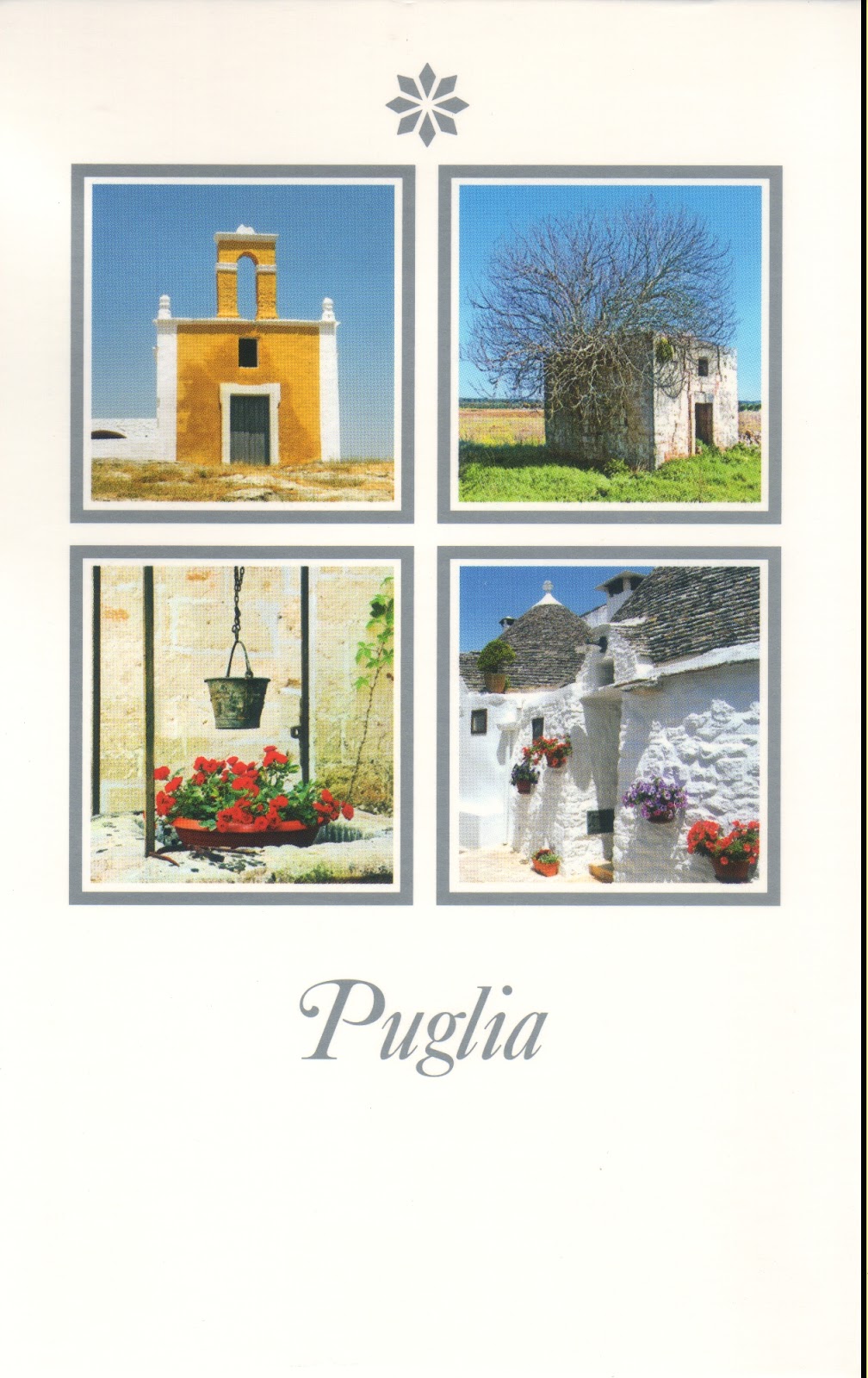
1° - Lecce, Italia
Gracias Sergio por tu envío, bellas postales, gracias por las estampillas y el sobre. ¡¡Eres el primero desde que comencé mi blog, GRACIAS!!
1° - Lecce, Italy
Thank you Sergio, for the postcards, the stamps and the cover. You are the first one I receive, since I start my blog. THANK YOU!!
1° - Lecce, Italy
Thank you Sergio, for the postcards, the stamps and the cover. You are the first one I receive, since I start my blog. THANK YOU!!
Foto/Photo: G. Manna & F. Piro
Puglia, Italia / Puglia, Italy
Foto/Photo: Franco Piro
Basílica de la Santa Cruz / Basilica of the Holy Cross
El arte de coleccionar tarjetas postales
Uno
de los más interesantes aspectos del coleccionismo y que tiene una relación
directa con la filatelia es la cartofilia o arte de coleccionar tarjetas
postales en sus tres aspectos: la tarjeta emitida por el Estado con su franqueo
impreso en la misma, la tarjeta ilustrada, y la de carácter esencialmente
carto-filatélico, constituida por la tarjeta conocida como “maximum” y que da
lugar a la maximafilia, algo así como la filatelia, cartofilia y marcofilia
reunidas en un todo.
El
arte de coleccionar tarjetas postales es muy antiguo, al principio solo se
coleccionaban las tarjetas por las vistas que ellas tenían, y se hacia mas bien
con el fin de tener una colección de fotografías o panoramas de los diversos países.
Más tarde el coleccionismo de tarjetas postales se convirtió en algo más
científico y sus cultores exigían que las postales tuvieran una estampilla de
correos con su correspondiente matasellos.
El
auge de la filatelia provoco la división entre los coleccionistas de sellos,
que recortaban las estampillas impresas de las tarjetas postales para sus
colecciones y los que verdaderamente se interesaban por las postales en si. Nació
entonces el coleccionismo de las “maximum”, que dió origen a la maximafilia o
sea el máximo de la perfección de la cartofilia. Se considera a la maximafilia
como parte integrante de la filatelia, ya que se puede resumir como el
coleccionismo de postales ilustradas que contienen ciertas características
determinadas.
El
coleccionismo de postales “maximum” tiene que ceñirse a ciertos cánones. Son
ellos: la presentación de la estampilla del lado de la vista, con su
correspondiente matasello, como faz primordial. Para que una postal sea considerada
“maximum” es preciso que presente concordancia, cuanto mayor sea ella, entre:
la postal, la estampilla y el matasellos de correos. Hay una condición “sine
qua non”: las estampillas no pueden ser
reproducción de la postal. Y se comprende que así sea, pues lo contrario seria
muy sencillo. Nada más fácil que confeccionar las postales limitándose el
editor, sin ningún trabajo, a reproducir o copiar la estampilla.
Algunos
especialistas han presentado sus puntos de vista en cuanto a las condiciones que
deben reunir las postales para ser consideradas como “maximum”. Todos ellos han
estado de acuerdo en lo que se refiere a las primordiales.
1.-
La postal debe presentar el mismo motivo de la estampilla, tanto más exacto
cuando ello sea posible, más no debe ser una reproducción de la estampilla.
2.-
La estampilla debe ser matasello en calidad del nacimiento o fallecimiento, u
otra localidad íntimamente relacionada con la persona presentada. Si el retrato
es de un Jefe de Estado o estadista, el matasello debe corresponder al de la
capital o localidad donde aquel actúe preponderadamente.
3.-
Para paisajes (vistas) el matasello escogido deberá ser de la oficina local. Si
no la hubiera debe utilizarse la más próxima.
4.-
El matasello debe ser aplicado exclusivamente mientras la estampilla se
encuentre en circulación.
Se
debe agregar que todos los matasellos deben ser absolutamente claros, y es de
primordial importancia que se lea claramente el nombre de la oficina postal y
la fecha.
Así
que recordemos, para que una postal pueda considerarse “maximum”, es preciso que
reúna la mayor cantidad de coincidencias: estampilla, matasello, motivo, tiempo
y lugar.
Se
puede decir que en cartofilia, lo más importante es la maximafilia, pero no
obstante el coleccionismo de otro tipo de tarjetas postales no es de
despreciar. Un ejemplo son las postales TCV, o sea postales con sello del lado
de la vista. Este tipo de colección se asemeja mucho a las postales “maximum”,
con la diferencia de que la estampilla no tiene que ser igual al matasello,
siendo únicamente necesaria las siguientes: que la estampilla pertenezca al país
a que corresponda la vista y que el matasellos sea de la localidad a que
pertenezca el paisaje o a la más cercana si en ella no existiera oficina
postal.
Un
nuevo fenómeno en el mundo de las postales es Postcrossing. Postcrossing es un
proyecto en línea que permite que los miembros envíen y reciban postales reales
de todas partes del mundo. Así que si estás interesado en ampliar tu colección,
al unirte a Postcrossing podrás enviar y recibir postales de alguien en algún
lugar del mundo.
The art of collecting postcards
One of the most interesting aspects of
collecting and that has a direct relationship with philately is deltiology the
art of collecting postcards in three aspects: the card issued by the State with
the postage printed on it, the illustrated card, and essentially the philatelic
one, consisting of the card known as “maximum” and that leads to maximafilia,
something like philately, the deltiology and marcophily gathered into a whole.
The art of collecting postcards is very old, and
initially collected only by the views they had, and it was rather to have a
collection of photographs and landmarks of several countries. Later collecting
postcards became something more scientific and followers demanded for postcards
to have a postage stamp with the appropriate postmark.
The philately boom caused the division among
stamp collectors, which cut the postcards to get the stamps for their
collections, and from the ones interested in the postcard itself. With this, it
born the collecting of the “maximum”, which led to the maximafilia or the
maximum of the perfection of cartofilia. The maximafilia is considered as an
integral part of philately, because it can be summarize as the collecting of
picture postcards that contain certain specific characteristics.
The “maximum” collecting of postcards must
adhere to certain canons. They are: the presentation of the label side of the
eye, with its corresponding postmark as primary face. For a postcard to be
considered “maximum”, it is necessary for a concordance, the higher the better,
between the postcard, the stamp and postmark. There is a condition “sine qua non”;
and the stamps cannot be reproduction of the postcard. And so it is understandable
that, because otherwise it would be very simple. Nothing easier than limiting
itself make the post editor, without any work, play or copy the stamp.
Some specialists have presented their views as
the conditions to be met by the postcards to be considered as “maximum”. They
have agreed in regards to the primary.
1.- The postcard must present the same motive of
the stamp, the more accurate where possible but should not be a reproduction of
the stamp.
2.- The stamp must be postmarked on the quality
of birth or death, or other location closely related to the person presented.
If the portrait is a head of state or statesman (stateswoman), the postmark
must correspond to the city or town where he or she acts.
3.- For landscapes (views) the postmark must be
from the local office. If none, it should be used the next available or the
closest.
4.- The postmark must be applied only while the
stamp is in circulation.
It is a must to add, that all postmarks must be
absolutely clear, and of greater importance to clearly read the name of the
post office and date.
So remember, that a card to be considered
“maximum”, it is necessary that meets the maximum matches: stamp, postmark,
reason, time and place.
We can say that in deltiology, the most
important is the maximafilia, but nevertheless the other postcard collecting is
not negligible. An example is the TCV postcard, which is the postcard with the
stamp on the side of the view. This type of collection is much like the postcard
“maximum”, with the difference that the stamps does not have to be equal to the
postmark, being only necessary the following: that the stamp belongs to the corresponding
country and that the postmark is either from the local
authority over the landscape or the nearest if it does not exist a post office.
A new phenomenon in the postcard world is
Postcrossing. Postcrossing is an online project that allows its members to send
and receive real postcards from all over the world. So if you are interested in
pushing a little your postcards collection, remember you can join Postcrossing
and you will be sending and receiving postcards from someone of somewhere in
the world!
martes, 22 de mayo de 2012
Filatelia temática
La
enorme variedad de temas que sirven de motivos ilustrativos de las estampillas
es lo que ha dado origen a lo que se denomina filatelia temática. La filatelia
temática es una de las formas modernas del coleccionismo de sellos, su auge se
inició hace algunas décadas y en unos cuantos años logró alcanzar un amplio
grado de desarrollo.
En
los últimos años la filatelia temática ha tenido que dividirse en dos formas:
la propiamente temática que es la que se ocupa de coleccionar los sellos que se
encuentran ligados por un tema común, aunque los motivos que ilustran los
sellos puedan no tener relación alguna unos con otros, pero que ya en conjunto
nos permitan el desarrollo de un tema central que relate una historia; y la
llamada filatelia temática de tópicos, que es la que el coleccionista reúna de
todos los sellos que en ellos aparezca un solo tópico, que puede ser tan amplio
como lo desees, pues recuerda que allí tendrás sellos de todo el mundo, además
recuerda que unos sellos tienen alguna relación con otros que ya están en tu colección;
estos sellos tienen que ser bien ordenados, bien clasificados, ya que no tienen
historia alguna.
El
coleccionismo temático de estampillas, no es más que una forma evolucionada de
la filatelia. Las colecciones temáticas no requieren inversiones mayores que
las posibilidades que tiene el coleccionista. El coleccionismo temático aumenta
año con año, su desarrollo sorprende; este rápido crecimiento ha aportado
nuevas y grandes ideas, ha sugerido nuevos temas, ofrece nuevos métodos y crea mejores y mayores oportunidades y placer diario a aquellas personas que
coleccionan temática.
El
coleccionismo temático tiene atractivos para todos, ya sean filatelistas o no;
todos encuentran un aliciente en las colecciones por temas, tenía la ventaja
hasta hace algunos años de que carecía de reglas, imposiciones y prohibiciones,
hoy es todo lo contrario y aparte de eso se califica la nitidez y limpieza de
la misma. El interés cultural de la filatelia ha sido reconocido desde que
formaron las primeras colecciones, recuerda que las colecciones temáticas
aparte de interés cultural tienen otro que se basa en la belleza de las
estampillas que lo forman.
En
la clasificación temática, el coleccionista encuentra una variedad de temas que
abarcan la ciencia, el arte, la cultura,
la técnica, etcétera; los motivos que ilustran los sellos dan un pretexto para
coleccionar desde la metafísica, la filosofía, el teatro, amor a las cosas, en
fin las opciones son bastante amplias.
No te imaginas cuanto
puedes reunir de sellos a la hora que te decidas a formar una colección temática,
recuerda que en esa colección habrá sellos de todo el mundo y a cual mejores en
diseño y belleza. El alto grado de desarrollo alcanzado por el coleccionismo
temático de estampillas, se ha logrado a pesar de ciertos opositores que para
su evolución ha tenido. Los coleccionistas de la vieja guardia adoptaron,
cuando la filatelia temática se inicio, una actitud de disimulo hacia la nueva
forma de coleccionar los sellos, considerándola como una forma de reunir sellos
solo por reunirlos, ya fueran bonitos o no, su actitud permaneció así por mucho
tiempo, hasta que se convencieron de las enormes posibilidades filatélicas del
coleccionismo temático y en la actualidad son miles y miles de personas que
coleccionan temáticas sin abandonar sus antiguas colecciones tradicionales.
Thematic philately
The enormous variety of topics that serve
illustrative purposes for stamps is what has given rise to what is called
thematic philately. Thematic Philately is a modern form of stamp collecting,
the boom began decades ago and in a few years it managed to achieve widespread
development.
In recent years the thematic philately had to be
divided into two forms: the actual issue is the one in charge of collecting the
stamps that are linked by a common theme, though the reasons that illustrate
the stamps may not have a relationship with others, but that it will enable us
to jointly develop a theme that tells a story, and the so called topical
thematic philately, which is what the collector collects from all the stamps
that they see of a single topic, which can be as wide as you want because,
remember, these are stamps from around the world and remember that some stamps
have some relationship to others already in your collection, these stamps must
be well organized, well classified, as they have no history.
The thematic stamps collecting, is no more than
an evolved form of philately. The thematic collections do not require major
investments than the possibilities the collector already has. Thematic collecting is increasing year by year its amazing development,
has brought new and great ideas, suggests new topics, provides new methods and
creates better and more opportunities and daily pleasure to those who collect by
theme.
Theme collecting has attractions for all
philatelists; all find a spark in the collections by subject. It had the
advantage until some years ago that it had no rules, impositions and
restrictions, today is the opposite and apart from that is scored by sharpness
and cleanliness. The cultural interest of philately has been recognized since
forming the first collections, remember that the thematic collections besides cultural
interest, they have another which is based on the beauty of the stamps that
form it.
In the subject classification, the collector has
a variety of topics covering science, art, culture, technology…, the reasons
that illustrate the stamps are a pretext for collecting from metaphysics,
philosophy, drama, love to things, in short the options are quite extensive.
Suscribirse a:
Entradas (Atom)